
Books

Beyond Ethnicism: Exploring Ethnic and Racial Diversity for Educators by Alice Wairimũ Nderitũ
October 27, 2018

Mũkami Kĩmathi, Mau Mau Freedom Fighter by Wairimũ Nderitũ

Book Cover: Mũkami Kĩmathi, Mau Mau Freedom Fighter by Wairimũ Nderitũ
Editions:Hardcover
ISBN: 9789966190321
Pages: 307
Excerpt:

Mükami Kimathi: Mau Mau Freedom Fighter is the story of the brave wife of one of Kenya’s foremost freedom fighters, Field Marshal

Dedan Kimathi Waciüri. Kimathi led the Mau Mau war in Kenya’s independence struggle against the British colonialists. Mükami’s role

as a daughter, wife, mother, freedom fighter and leader is varied and very complex.

Her story spans pre- and post-independent Kenya. Her experiences provide an important complement to existing written literature on

Kenya’s history. In 2003, the Mwai Kibaki Government lifted the ban put in place by the British colonialists declaring the Mau Mau as terrorists, and recognised Mükami Kimathi and other freedom fighters as national heroes and heroines celebrated on 20th October

as Mashujaa Day.

This book gives an in-sight into the role of women freedom fighters and the struggles they faced both during and after the war. It is an

READ MORE

incredible story of immense self-sacrifice and love for Kenya. Mükami provides the lens to see the wider picture of women in the

independence struggle, the neglect and betrayal of wives of Mau Mau fighters in particular and women in general in Kenya’s making.

Beyond her role in the independence struggle, Mükami’s story has many historical highlights such as time shared with Kimathi,

meeting Nelson Mandela and her fruitful and strong relationship with Kenya’s human rights movement.

COLLAPSE

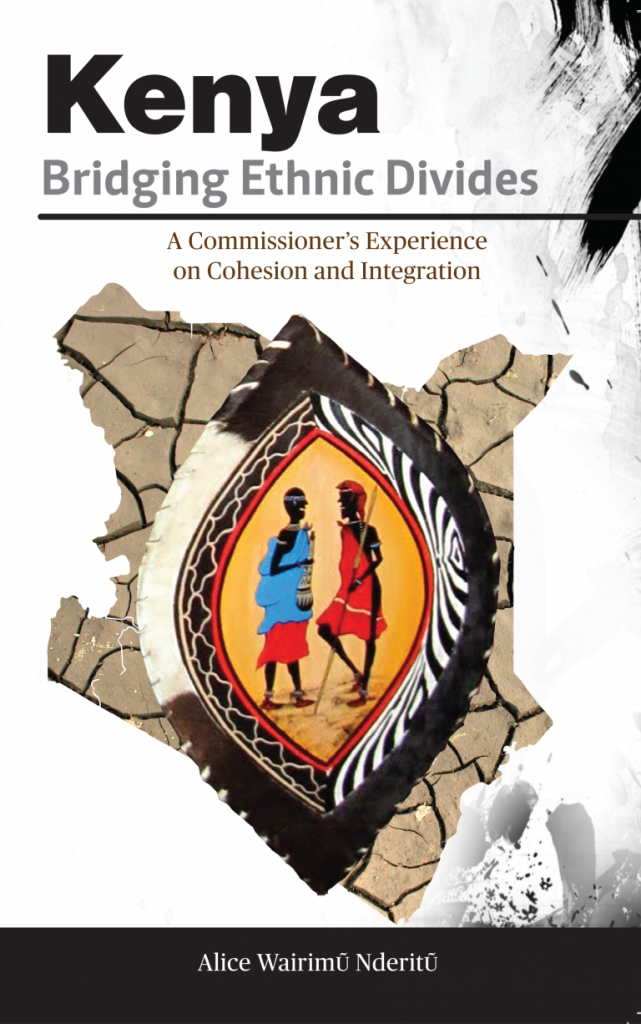
Kenya Bridging Ethnic Divides by Alice Wairimũ Nderitũ
October 27, 2018
Mũkami Kĩmathi, Mau Mau Freedom Fighter by Wairimũ Nderitũ
October 27, 2018

Beyond Ethnicism: Exploring Ethnic and Racial Diversity for Educators by Alice Wairimũ Nderitũ

Book Cover: Beyond Ethnicism: Exploring Ethnic and Racial Diversity for Educators by Alice Wairimũ Nderitũ
Editions:Hardcover
ISBN: 978966190307
Pages: 167
Excerpt:

The manual, Beyond Ethicism, Exploring Racial and Ethnic Diversity for Educators, a first of its kind in Kenya, speaks to the key issues of ethnic and racial belonging that are such a key determining factor in defining and dividing Kenyans. These two issues influence many social, economic and especially political-decisions. The manual transcends the limitations of current discussions on ethnicism and racism. Questions Of ethnic and racial belonging are connected to some of the deepest moral and political decisions of our time. Belonging is an emotional subject that as a country citizens should not lose capacity to discuss coherently. An educator who wanted  to know how to end ethnicism and racism inspired the writing of this manual. Ethnic and racial favoritism as well as discrimination have seeped into the education system.

READ MORE

Educators sit in staff rooms  as members of political parties or ethnic communities and sometimes consciously or unconsciously perpetuate ethnic and racial stereotypes and prejudices. Educators find talking about ethnicism and racism difficult. They do not know where to begin yet they can recognize ethnicism and racism in learners. Sometimes they practice it themselves, favoring or discriminating learners on the basis Of ethnicity or-race. Educators are

sometimes helpless in arresting ethnicist and racist practices in their learners or themselves, as they do not have the tools to do so. Educators require a tool that helps them to address contextual ethnic and race related concerns without undermining the human rights inherent in every being. This tool will be the key to a new generation of Kenyans defined but not divided by belonging. This manual is a practical resource that creates this kind of tool and the space

to create a discourse for educators amongst themselves on how to combat ethnicism and racism. It asks rarely addressed critical and significant questions on the meaning of ethnic and racial belonging. The manual addresses the arresting of stereotypes and prejudice before they morph into actual discrimination and sometimes violence.

COLLAPSE
Beyond Ethnicism: Exploring Ethnic and Racial Diversity for Educators by Alice Wairimũ Nderitũ
October 27, 2018

Kenya Bridging Ethnic Divides by Alice Wairimũ Nderitũ

Book Cover: Kenya Bridging Ethnic Divides by Alice Wairimũ Nderitũ
Editions:Hardcover
ISBN: 978966190345
Pages: 524

The National Cohesion and Integration Commission (NCIC) was set up to facilitate and promote equality of opportunity, good relations, harmony and peaceful coexistence between persons of the different ethnic and racial communities of Kenya, and to advise the Government on all aspects thereof after the violence that followed the December 2007 elections. In Kenya, Bridging Ethnic Divides: A Commissioner’s Experience on Cohesion and Integration, Commissioner Alice Wairimu Nderitu takes you behind the scenes of the

NCIC’s efforts to ensure peaceful co-existence. These include working with elders, mediating confidentially between political leaders at the highest levels and co-founding and working as first Co-Chair of Uwiano Platform for Peace, a conflict prevention agency largely credited

with leading efforts in ensuring peaceful processes during the 2010 Constitutional referendum and 2013 General elections.

The book tells of NCIC’s efforts in grappling with the seemingly intractable problem of managing the negative consequence of ethnic differences on questions such as: Why is Kenya so ethnically polarised? Why is an ethnic group the key defining factor in Kenyan politics?

What hope is there for an inclusive Kenya? The book shows that positive policies and intra- and inter-ethnic spaces can be used to counter

negative influences that lead to fear, exclusion and violence. The diversity of Kenya’s ethnicities and races need not be a pretext for conflict, but a source of truly national identity. It proves that dialogue on understanding differences and commonalities leads to improved relationships and understanding on societal dynamics. This in turn, contributes to preventing and transforming conflicts through appropriate inclusion policies, identifying entry points for change as well as opportunities to tackle the norms and behaviours that underpin structural disparities.